
Mulch & Pine Straw Installation
Home / Mulch & Pine Straw Installation
10 +
Years in North Georgia
2
refresh seasons per year
3
Mulch Colors
Longleaf
Pine Straw Installed
Fresh Beds Make the Whole Yard Look Better. Mulch Installation, Pine Straw Installation, and Spreading.
A fresh layer of mulch or pine straw is one of the fastest, most cost-effective ways to transform a property’s appearance. Beds that were looking tired, faded, or overgrown suddenly look intentional and maintained. Beyond appearance, fresh material suppresses weeds, retains moisture through North Georgia’s summer heat, and protects plant roots through winter cold snaps. It’s genuinely one of the best-value landscape investments you can make on a regular basis.
Dawsonville Lawn Pros supplies and installs both mulch and pine straw across Gainesville, Dawsonville, and Cumming. We bring the material, handle the installation, and leave your beds looking finished. You tell us which material you want — or we advise based on your beds, your property’s style, and your plants — and we take care of the rest.
We handle mulch and pine straw delivery and installation throughout Gainesville, Dawsonville, and Cumming — we source and haul everything ourselves, spread it at the correct depth, and leave your beds finished. There is no separate delivery to arrange.
Mulch or Pine Straw — Which Is Right for Your Property?
Both materials do the same core jobs: suppress weeds, retain soil moisture, moderate soil temperature, and give beds a finished, cared-for appearance. The choice between them comes down to your property’s style, the type of beds you have, and in some cases the specific plants growing in them. Here’s an honest side-by-side comparison for North Georgia conditions.
The pine straw and soil acidity myth: You’ll hear that pine straw makes soil too acidic. This is largely a misconception. Fresh pine needles are acidic, but as they decompose — which is the stage when they’re acting as mulch — their pH effect on soil is minimal and well within the buffering capacity of most North Georgia soils. Pine straw is genuinely beneficial for acid-loving plants like Azaleas, Camellias, and Hydrangeas, which are common across our three counties. If you’re concerned about soil pH, we’re happy to discuss it—but pine straw isn’t the problem most people think it is.
Other Services
Maintenance
Landscaping
Not Sure Which Material Fits Your Beds? We'll Tell You Straight.
Free site visit, honest recommendation, written quote. Material and installation included.
The Mulch We Install
Wood Mulch
Rubber Mulch
Approx. 100 sq ft per cubic yard
Black / Brown / Red
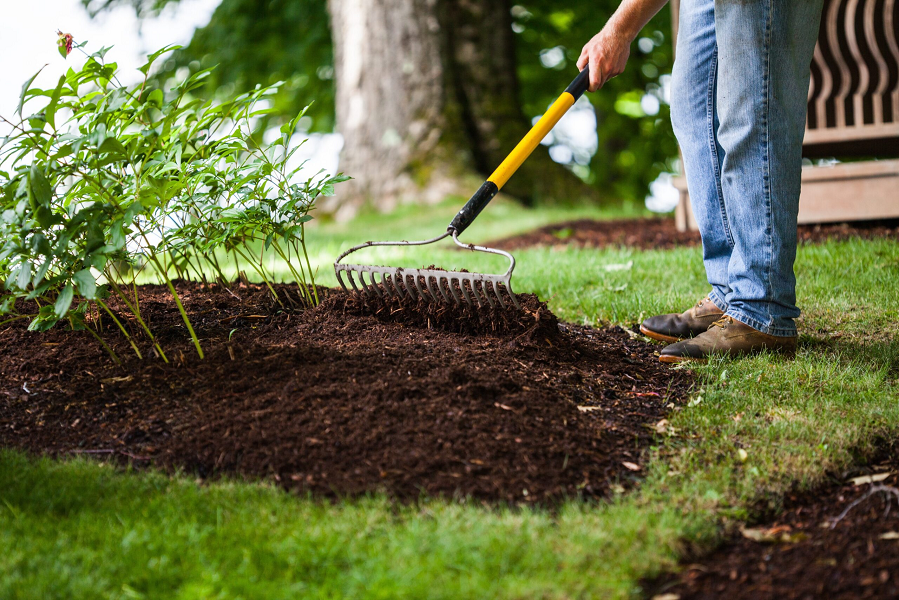
We install quality softwood mulch in your choice of black, brown, or red. Brown is the most natural-looking and the most popular choice across Gainesville’s and Cumming’s established neighborhoods. Black gives beds a sharp, high-contrast look that makes plant foliage pop — common in newer Forsyth County homes. Red adds warmth and is a popular choice for properties with brick exteriors, where it complements the home’s palette. All three colors perform the same way — the difference is purely aesthetic. We bring the material; you pick the color that fits your property.
Approx. 43 sq ft per cubic yard
Black / Brown / Red
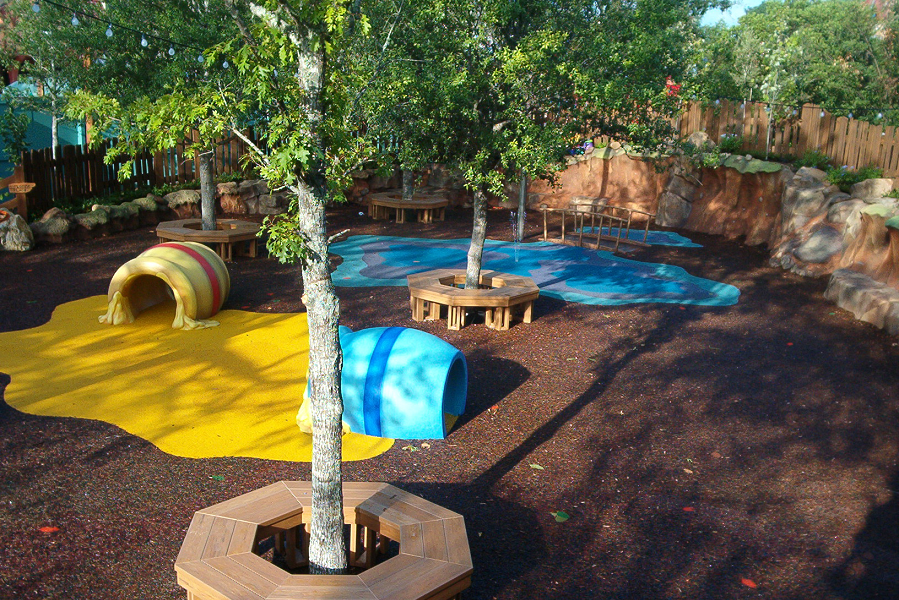
Rubber mulch is available upon request in black, brown, and red. Unlike softwood mulch, it does not decompose — meaning no annual refresh, no color fade, and no organic breakdown into the soil. It is the right choice for high-traffic areas, playground surfaces, and any application where a permanent low-maintenance layer is the goal. Playground mulch installation requires a 6-inch depth for proper fall attenuation rather than the standard 2–3 inches for landscape beds — let us know the intended use when you call so we quote the correct quantity. The trade-off is that it does not add organic matter to the soil the way softwood mulch does, and it retains more heat in full summer sun. We discuss both sides during the estimate so you choose the right material for your specific beds.
The Pine Straw We Install
Longleaf Pine Straw
Approx. 40 sq ft per roll
3–4 inch Depth
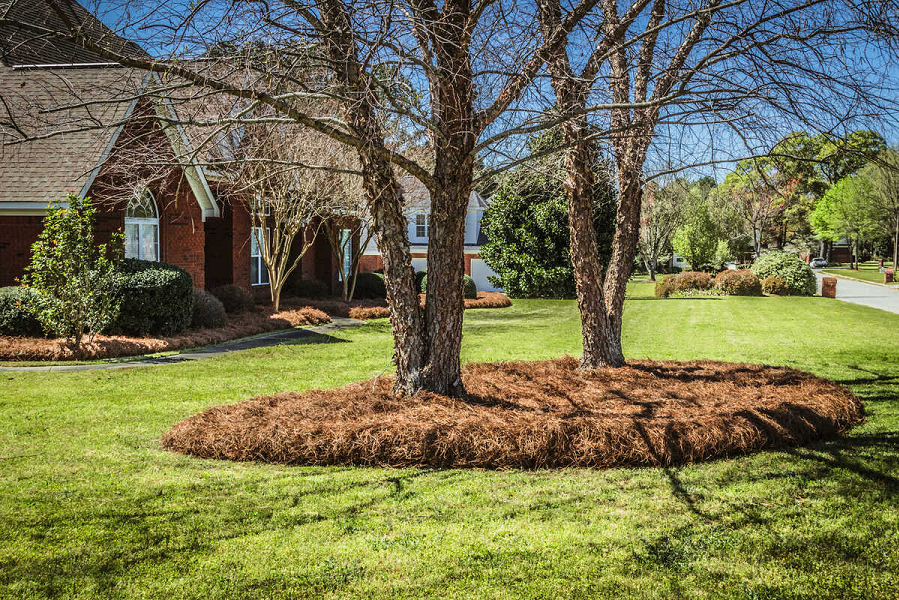
Longleaf pine needles are the longest, densest, and most durable pine straw available. The higher natural resin content gives longleaf significantly better color retention than short-needle varieties — a fresh longleaf install holds its warm reddish-brown color for 9–12 months, making it a genuinely annual product rather than something that needs refreshing every six months. The interlocking needle structure is also what makes longleaf the right choice for North Georgia’s sloped properties: those long needles grip each other and grip the soil surface in a way that holds on grades where short-needle straw would wash out in a summer storm. It costs a little more per bale than short-needle pine straw, but the longevity and performance in our specific terrain make it the only variety we recommend and install.
Pricing — All Three Materials
All pricing includes material, hauling, spreading, and finished depth. No separate delivery fees. Volume discounts apply automatically when thresholds are met — confirmed at time of estimate.

Volume discount — rubber mulch: The 5 cubic yard threshold is approximately 170 bags. At that point the per-bag price drops from $12.00 to $11.00 and the per-yard rate drops from approximately $374 to approximately $340. For larger bed projects, the discount is applied automatically — no need to ask.
Do We Remove Old Material First?
This depends on the condition of what’s already in the bed — and we tell you honestly what we think rather than defaulting to one approach for every job.
When We Top-Dress Over Existing Material
If your existing mulch or pine straw is in reasonable condition — not heavily compacted, not more than an inch or two thick, not showing signs of fungal growth or matting — top-dressing with fresh material is the right call. Adding a fresh 2–3 inch layer over an existing base that still has some structure is practical, cost-effective, and produces an excellent result. Most routine annual refreshes fall into this category.
When We Remove First
If the existing material is heavily compacted into a thick mat, showing significant fungal growth, harboring pest activity, or has built up to a depth where adding more would bring it too close to plant crowns and stem bases, removal before fresh installation is the better approach. Mulch piled against plant stems can hold moisture, promoting crown rot; if that’s the situation in your beds, removing the old material and starting fresh protects the plants. We assess this during the estimate and tell you which way to go before quoting the job.
Depth matters: the target depth for both mulch and pine straw is 2–3 inches over the soil surface. Less than 2 inches and weed suppression and moisture retention are compromised. More than 4 inches creates anaerobic conditions at the soil surface that harm roots, and mulch piled against stem bases promotes disease. We install at the right depth — not just until the bag is empty.
Beds That Look Finished and Stay That Way
Material supplied, professionally installed, right depth every time. Gainesville, Dawsonville, and Cumming.
When to Refresh — North Georgia Timing
Spring Refresh (March – April)
The most popular timing. A spring mulch or pine straw refresh cleans up accumulated debris and fading from winter, gives beds a fresh appearance heading into the growing season, and adds a new moisture-retention layer before North Georgia’s summer heat arrives. Most homeowners who refresh once a year do so in spring, which is the busiest window for this service — scheduling early is strongly recommended.
Fall Refresh (October – November)
The second most common timing, and the one we recommend for properties that can do only one refresh per year, is when plant protection through winter is the priority. A fresh layer of mulch in fall insulates plant roots through Dawsonville’s and Gainesville’s Zone 7b winter cold snaps. It also gives beds a clean, finished look through the dormant season when everything else in the landscape is brown. Pine straw is particularly popular for fall refreshes on North Georgia’s wooded properties.
Two Refreshes Per Year
For properties where appearance and plant health are both priorities — particularly in Forsyth County, where HOA standards apply, or in homes where the front beds are highly visible — a spring and fall refresh is the most complete approach. The spring install handles the growing season; the fall install handles winter protection. Longleaf pine straw is the most cost-effective two-year refresh option since its longer life cycle means it still looks reasonable at the six-month mark.
Fresh Beds, Done Right, Every Season
10+ years serving North Georgia. We supply the material and handle the installation. Free estimates.
We have sloped beds along the front of the property, and mulch always migrates downhill after rain. Dawsonville Lawn Pros recommended longleaf pine straw for the slope, and it has stayed exactly where they spread it through two wet springs. The beds look better than they ever did with wood mulch on that grade.
We went with rubber mulch around our playground area, and it looks great and stays put. Dawsonville Lawn Pros explained the depth difference between playground use and a regular bed, and we did it right the first time. The pricing was clear before they started — no surprises on the invoice.
They flagged that our previous landscaper had been piling mulch against our wood siding and explained the termite bridge risk. They pulled it back correctly, and the rest of the install was clean and fast. Nobody had ever told us that before. We do a spring refresh with them every year now.
Services That Pair Well with a Mulch or Pine Straw Refresh
A mulch or pine straw refresh is most impactful when the beds are in good shape before the material goes in. We also provide:
- Spring & Fall Cleanup — clearing seasonal debris from beds before fresh material goes in
- Garden bed installation — if beds need rebuilding before fresh material makes sense
- Plant installation — refreshing material after new plants are installed finishes the project
- Garden bed edging — a clean border makes the fresh mulch look even sharper
- Sod installation — if the lawn alongside the beds needs renovation at the same time
Our Service Area — Hall, Dawson & Forsyth Counties
We install mulch and pine straw throughout our three-city North Georgia service area
Gainesville, GA
Dawsonville, GA
Cumming, GA
Not sure if we reach your address? Call 762-380-2214 and we’ll confirm your location in under a minute.
Call Now — Gainesville, Dawsonville & Cumming
Licensed. Insured. Family-owned. 10+ years. Material supplied and installed.
Frequently Asked Questions — Mulch & Pine Straw Installation
The standard application depth is 2–3 inches for both mulch and pine straw. To calculate mulch needed: measure the square footage of your beds and divide by 100 — that gives you the number of cubic yards needed at a 3-inch depth. Pine straw is measured in bales; one bale of longleaf covers roughly 40 square feet at a 3-inch depth. We measure your beds during the estimate and include an exact material quantity in the quote — you don't need to calculate anything yourself.
Rubber mulch is made from recycled tire rubber and is available in black, brown, and red. It does not decompose, does not require annual refreshing, and holds its color for years. It is the right choice for high-traffic areas, playground surfaces, and beds where you want a permanent low-maintenance layer. The trade-off is that it does not add organic matter to the soil as it breaks down, and it retains more heat in full summer sun than organic mulch does. We discuss both sides during the estimate.
Mulch typically needs refreshing every 12–18 months — when it has faded significantly, compacted, or thinned to less than an inch of coverage. Longleaf pine straw holds up well for 9–12 months before a refresh. The honest trigger is visual: faded color, thin coverage, or weeds breaking through more than they should. We can advise on the right frequency for your property during the estimate.
Pine straw is the clear choice for sloped areas on North Georgia's hilly terrain — particularly in Gainesville and Dawsonville, where grade changes are common. Longleaf pine needles interlock with each other and grip the soil surface in a way that mulch doesn't, making pine straw significantly more resistant to washing out during heavy rain events. Mulch on a slope can migrate noticeably after a single summer storm. If your beds are on any meaningful slope, longleaf pine straw is our recommendation every time.
It depends on the condition of what's already there. If the existing material is in reasonable shape — not heavily compacted, not matted, not showing fungal growth — we top-dress over it with fresh material. This is the most common approach for routine annual refreshes. If the existing material has compacted into a thick mat, has significant fungal or pest activity, or has built up to the point where adding more would bring it too close to plant stems and crowns, we recommend removal before the fresh install. We assess this honestly during the estimate and tell you which approach makes sense for your beds.
Yes — but the depth is different from a standard landscape bed. Playground installations require 6 inches of rubber mulch for proper fall attenuation rather than the standard 2–3 inches for beds. Let us know the intended use when you call so we quote the correct depth and quantity.
Each roll covers approximately 40 square feet at the correct 3–4 inch depth. To estimate roll count, measure each bed area in square feet and divide by 40.
One cubic yard covers approximately 100 square feet at the correct 2–3 inch depth. To estimate yardage needed, measure total bed square footage, divide by 100, and add about 10 percent for uneven areas.