
Garden Edging Installation
Home / Garden Edging Installation
The Edge Is What Makes Everything Else Look Intentional
A well-planted garden bed without a defined border looks unfinished. The same bed with a clean, defined edge — whether that’s a steel rail, natural stone, or a line of brick pavers — suddenly looks designed rather than just planted. The border tells the eye where the bed ends, and the lawn begins, and that visual separation gives a landscape its sense of order and intention.
Beyond appearance, a properly installed physical border does practical work. It stops grass roots from creeping into the bed, holds mulch from washing onto the lawn during rain, and reduces the re-edging maintenance needed to keep a clean line over time. Dawsonville Lawn Pros provides garden edging installation and landscape edging services throughout Gainesville, Dawsonville, and Cumming — natural edge redefining, metal edging installation, stone edging installation, brick edging, plastic edging, and paver borders. Garden edging installation is priced per linear foot — we measure your beds during the estimate and give you a written per-foot quote before any work begins.
Other Services
Maintenance
Landscaping
Edging Materials We Install
Not every material is right for every property. The right choice depends on your home’s style, the shape of your beds, how much you want to spend, and how long you want the edging to last without replacement. Here’s an honest comparison of what we install and where each works best.
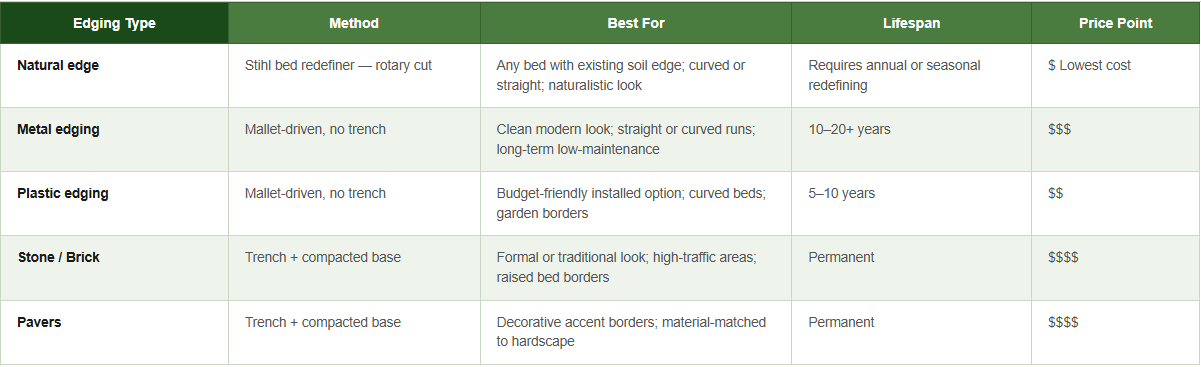
A note on thin plastic edging: we don’t install the thin, lightweight plastic strips commonly found at big-box stores. They buckle, heave out of the ground in North Georgia’s freeze-thaw cycles, and break down in Georgia’s UV exposure. If plastic is the right material for your project, we use heavy-gauge landscape plastic that holds its shape and stays in the ground. If you’ve seen the thin stuff fail before, that’s exactly why.
Not Sure Which Material Is Right? We'll Tell You Straight.
Free site visit, honest recommendation, written quote. No obligation.
Natural Edge Installation
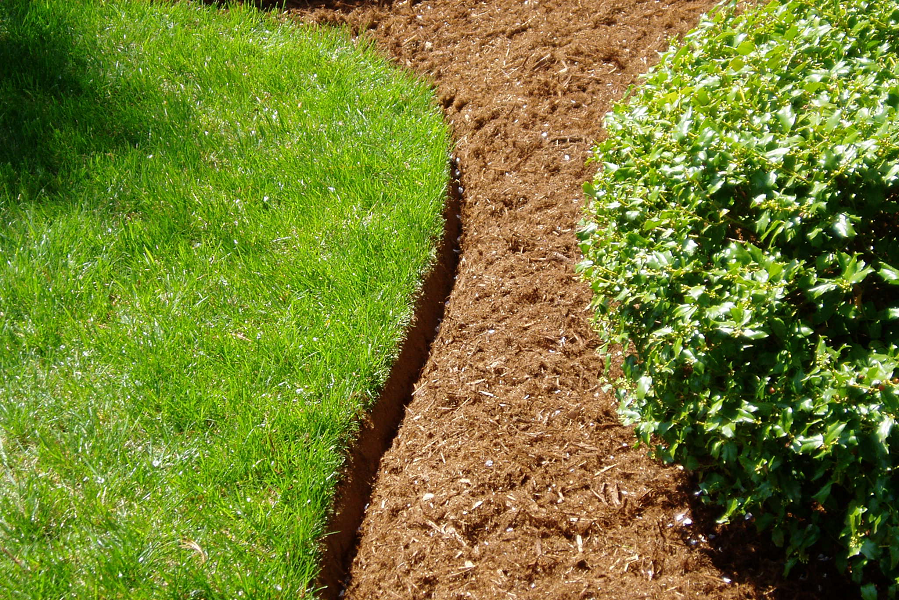
Natural edge installation — sometimes called bed redefining — is the process of cutting a clean, sharp line between the lawn and the bed using a rotary blade rather than a spade or string trimmer. We use the Stihl bed redefiner attachment, which cuts a precise vertical edge through the soil surface and removes the ribbon of soil and turf that has crept over the bed line. The result is a crisp, defined transition that makes the whole bed look intentional without any installed material.
Natural edge installation is the right call for properties where the naturalistic look fits the landscape style, for any bed where the homeowner prefers the look of a cut soil edge over an installed border, and as the most cost-effective way to restore a defined line on a bed that has an existing edge. It requires redefining annually or seasonally as the edge softens — which is also a service we provide on a recurring basis. For Dawsonville’s wooded properties where the informal, naturalistic look suits the surrounding landscape, natural edge redefining is often the best fit.
Metal Edging Installation
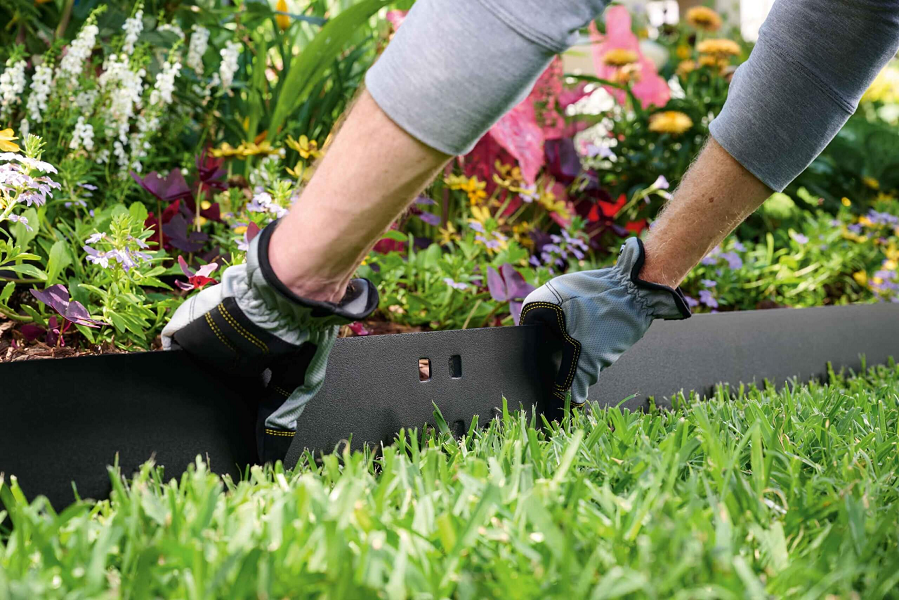
Metal edging installation — also called steel edging installation — is the highest-performing installed option for North Georgia properties where long-term durability and a clean modern look are the priorities. We install heavy-gauge steel or aluminum edging using a mallet-driven method that requires no trench: the edging is driven directly into the soil along the bed perimeter and staked at regular intervals to hold position. No concrete, no digging, no mess.
The result is a thin, low-profile rail that creates a permanent, razor-sharp line between the bed and the lawn. Metal edging installation holds its line for 10 to 20+ years with no maintenance other than occasional re-staking if frost heave occurs — which is minimal in North Georgia’s Zone 7b climate. It is the most popular choice on newer construction properties in Forsyth County’s HOA communities where the clean, minimal look is the aesthetic standard, and on any property where the homeowner wants a permanent edge that doesn’t require replacing every few years.
Plastic Edging Installation
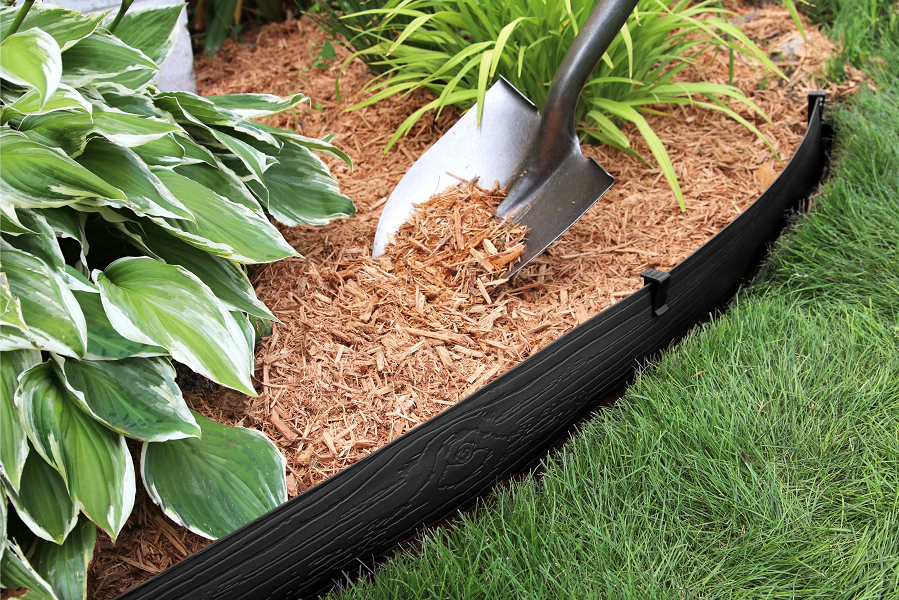
Plastic edging installation offers a mid-range option between the cost of natural edge redefining and the permanence of steel or stone. Like metal edging, plastic edging is mallet-driven with no trench required. It handles curves well — better than metal in tight-radius applications — and is a practical choice for informal garden borders and property areas where the edging is less visible from the street.
The plastic edging we install is heavy-gauge commercial landscape grade — not the thin flexible strips sold at home improvement stores that buckle, heave, and degrade in North Georgia’s heat and UV exposure. Heavy-gauge plastic installed correctly holds its shape and position for 5 to 10 years. It is the right call when budget is the primary constraint and the bed layout involves significant curves that would require bending metal edging.
Stone and Brick Edging Installation
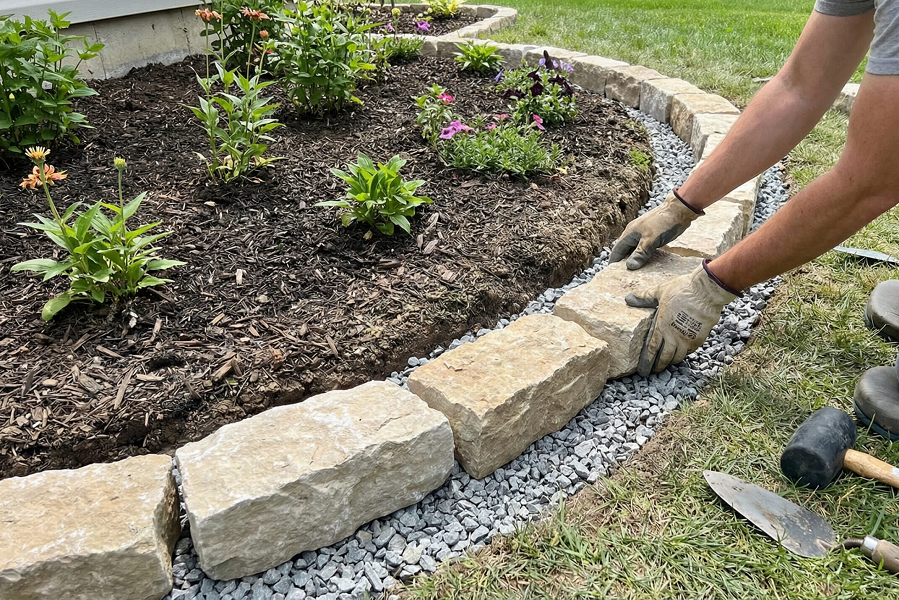
Stone edging installation and brick edging installation are the right choices when the property’s style calls for a traditional or formal look, when a raised bed border is needed to hold significant grade changes, or when the homeowner wants a permanent edge that matches the material character of the surrounding hardscape. Unlike mallet-driven metal and plastic, stone and brick edging installation requires a trench and a compacted gravel base — the material must be set level, with proper base preparation, to stay in place through North Georgia’s seasonal temperature swings.
We install natural fieldstone for a naturalistic look common on Dawsonville’s wooded properties, cut stone for clean formal borders on Gainesville’s and Cumming’s established properties, and brick or cobblestone for traditional or period-appropriate installations. Stone and brick edging installation is the most labor-intensive option and is priced accordingly — but properly installed, it is a permanent improvement that never needs replacing and adds material character to the landscape that metal and plastic cannot match.
Paver Edging Installation
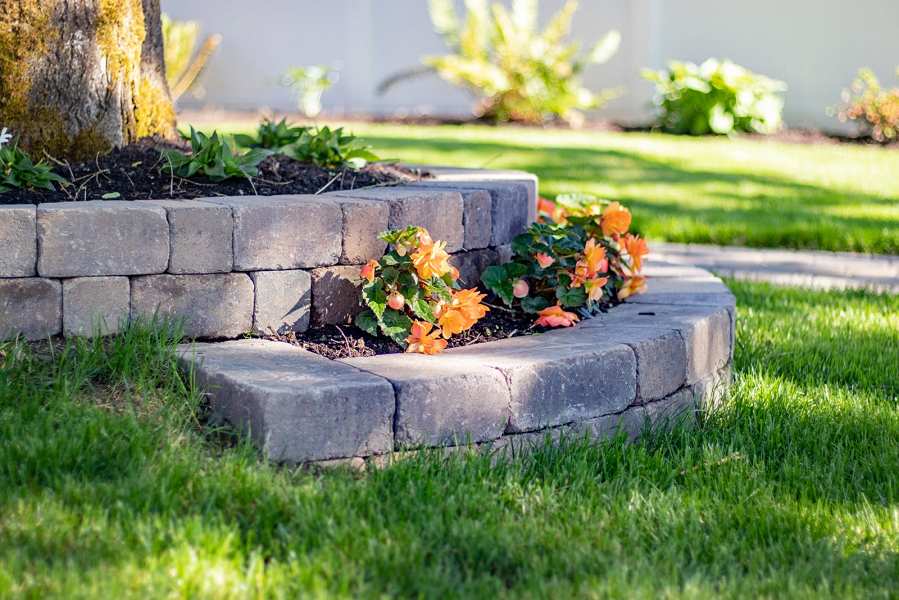
Paver edging installation uses the same trench and compacted base method as stone and brick, but with manufactured concrete or clay pavers rather than natural stone. Paver edging is the right choice when the property already has paver hardscape — a paver patio, walkway, or driveway apron — and the homeowner wants bed edging that matches that material. It creates a cohesive, designed look that ties the landscape elements together.
We install paver edging as a single-course border or as a mow strip — a flat, level row of pavers that the mower wheel can run along, eliminating the need for string trimming along the bed edge entirely. On Cumming’s HOA properties where bed maintenance standards are enforced, a paver mow strip is one of the most practical long-term edging investments available.
When Landscape Edging Installation Makes Sense
Physical bed edging installation is the right project in a few distinct situations — here’s how to identify which one applies to your property.
New Bed Installation
When we install a new garden bed or flower bed from scratch, edging installation is the finishing step that makes the whole project look complete. The bed shape is established, the plants are in, the mulch is down — the border locks it all in and gives the bed a defined, permanent perimeter. Edging installed at this stage is the cleanest installation because we’re working with fresh, undisturbed soil at the bed perimeter.
Replacing Failed or Missing Edging
The thin plastic edging installed by builders on new construction properties in Forsyth County is the most common replacement job we handle. It buckles, heaves, and loses its line within a few seasons. Replacing it with steel, stone, or heavy-gauge plastic produces a permanent result that doesn’t need revisiting. We remove the old material, assess the bed perimeter, and install the replacement correctly.
Bed Reshaping with New Edging
Some properties have beds that were originally laid out with no clear design logic — they grew over time through ad hoc additions and haven’t had a clean perimeter in years. We reshape the bed outline, cut a new clean edge, and install permanent edging along the new line in a single project. This is one of the most impactful landscape improvements available: a bed with a well-considered shape and a clean border looks designed even when it’s filled with simple plants.
Our Garden Edging Installation Process
Garden bed edging installation is more involved than it looks from the street. Getting it right — level, at the correct depth, properly anchored — is what determines whether it stays put for years or starts heaving and shifting within a season.
1
Site Visit & Material Recommendation
We walk the bed perimeter, assess soil conditions along the edge, check for root interference from nearby trees, and assess the grade. For North Georgia properties with significant clay, tree roots, or established natural edges, this assessment shapes the material recommendation. We tell you which material suits your specific conditions before any work begins — not after.
2
Marking the Edge Line
For new installs or reshaping projects, we mark the bed outline before doing anything else. For curved beds, we mark the line with spray paint so you can see and approve the shape before a single stake goes in or a shovel touches the ground. Getting your sign-off on the shape first avoids the far more expensive problem of adjusting edging after it’s already set.
3
Installation — Method Depends on the Material
Metal and plastic edging is driven directly into the ground with a mallet — no trenching required. The edging stakes along the back keep it anchored in place at the right depth and angle. This makes metal and plastic installations fast, clean, and low-disturbance to existing plants and lawns. Stone, rock, pavers, and brick are different — they need a prepared base to sit on. We dig a trench along the marked line, create a stable, compacted base, and set each piece at the correct height so the top edge sits at a consistent, level line. Stone and brick laid directly on undisturbed ground will shift and settle unevenly within a season, so the base work is what makes the border hold its shape long-term
4
Cleanup & Final Walk
Once the edging is set, we clean up any disturbed soil or displaced mulch along the perimeter and do a final walk of the entire border. We check that the line is consistent, the edging is sitting at the right height, and everything looks the way it should. You see it before we pack up — not in a photo afterward.
A Defined Edge Changes How the Whole Yard Reads
Free estimate, honest material recommendations, clean installation. Gainesville, Dawsonville, and Cumming.
Our foundation beds had no border at all — just a hand-cut edge that grass immediately grew back into every season. Dawsonville Lawn Pros installed steel edging along all three beds, and the difference is night and day. The beds look designed now, not just planted, and I haven't had to re-edge anything in over a year.
We wanted edging that looked natural against our wooded property in Dawsonville — not plastic or metal. Dawsonville Lawn Pros recommended natural fieldstone along our front beds and helped us reshape the outline at the same time. It looks like it belongs on the property rather than something added to it.
The thin plastic edging the builder installed had heaved out of the ground, looking terrible. Dawsonville Lawn Pros replaced it with brick edging that actually matches the style of our home and has stayed perfectly in place through two winters. Should have done it years ago.
Our Service Area — Hall, Dawson & Forsyth Counties
Dawsonville Lawn Pros installs garden bed edging throughout North Georgia’s three-city corridor. We understand the terrain, soil, and seasonal conditions that vary across these communities — because we’ve been working in them for 10+ years.
Gainesville, GA
Dawsonville, GA
Cumming, GA
Not sure if we reach your address? Call 762-380-2214 and we’ll confirm your location in under a minute.
Services That Work Well with Bed Edging
Garden edging installation is often most impactful when combined with other landscape work in the same visit. We also provide:
- Garden bed installation — full bed build from soil prep to plants, mulch, and edging
- Plant installation — replacing or adding to existing beds after edging is installed
- Mulch and pine straw installation — bed dressing refresh after edging is set
- Sod installation — if the lawn alongside the bed needs renovation
- Spring & Fall Cleanup — seasonal property reset to keep edged beds looking their best.
Frequently Asked Questions — Garden Bed Edging Installation
Lawn edging is the process of cutting a clean line between the lawn and a bed — done with a spade, string trimmer, or mechanical edger, and required repeatedly throughout the growing season as grass grows back into the cut line. Garden bed edging installation is the process of installing a permanent physical barrier — metal, plastic, stone, or brick — along the bed perimeter. The physical border keeps grass from creeping into the bed, holds mulch in place, and significantly reduces how often lawn edging cuts are needed to maintain a clean appearance. Dawsonville Lawn Pros installs physical bed borders — the permanent structural solution, not the repeated maintenance cut.
Steel edging and natural stone both perform extremely well in North Georgia's climate. Steel edging develops a surface patina over time but won't rust through for decades and stays buried and anchored in Georgia clay reliably. Natural stone is essentially permanent — it doesn't degrade, rust, or break down. Both are more expensive than plastic upfront but require no replacement over a typical homeownership period. Thick-gauge plastic edging is a solid mid-range option that lasts 10–15 years. Standard thin plastic — the kind sold at big-box stores — doesn't hold up in North Georgia's UV exposure and freeze-thaw cycles and is not something we install.
Yes — working around established plants is standard for most of our edging installations, since the majority of requests involve existing beds. We cut the perimeter trench carefully to avoid disturbing root zones, and we work by hand around any plants within reach of the trench line. The only situation where we flag concern upfront is when mature shrubs have significant surface roots right at the bed perimeter — in those cases, we discuss the trench route with you before digging so there are no surprises.
Natural stone — fieldstone, river rock, or flat flagstone — integrates most seamlessly with Dawsonville's wooded, naturalistic landscape character. It reads as something that belongs on the property rather than something installed on it, and it pairs well with the organic forms of mature hardwoods and shade plantings common on Dawson County lots. Cobblestone is another strong choice for a more refined but still natural look. Steel edging works on Dawsonville properties too — particularly on cleared areas or more contemporary homes — but the organic stone options suit the wooded aesthetic most naturally.
Both. New bed installations are actually slightly easier from a pure installation standpoint, since we're working with undisturbed soil at the perimeter. Existing beds require more care to avoid disturbing established plants and root systems. Both produce excellent results — the process just differs in the level of care we take around the existing plantings. If you're having a new bed built, we recommend including edging in the same project so the entire installation is completed at once.
For a standard residential project — two or three foundation beds around a typical home — expect a half-day to full-day installation. Metal and plastic edging installs faster because there's no trenching involved — we drive the edging in with a mallet and stake it along the perimeter. Stone, brick, and paver borders take longer because they require base preparation before the material goes in. Larger projects with extensive bed coverage, complex reshaping, or heavier stone and brick work take proportionally more time. We give you a realistic timeline during the estimate.
Yes — though sloped terrain does require additional attention. On Gainesville's and Dawsonville's hillier properties, we follow the grade rather than forcing a perfectly level line, which produces a result that looks intentional rather than fighting the terrain. For stone and brick on steeper slopes, we may set the material as steps down the grade rather than a continuous run, which is both more stable and more visually coherent than trying to hold a single level line across a significant grade change. We discuss this approach during the site visit for any property with meaningful slope.
Yes — and this is one of the most common combinations we do. Installing new edging and refreshing the mulch in the same visit makes practical sense: the edging installation disturbs the existing mulch at the bed perimeter anyway, so following up with a full mulch application leaves the bed looking completely finished rather than freshly worked. We can quote both services together during the estimate.