
flower bed installation Services
Home / Flower Bed Installation
Flower Bed Installation Done Right — First Time and Every Time
Most flower bed installations fail for the same reason: wrong plant, wrong spot, wrong soil prep. Dawsonville Lawn Pros builds flower beds and garden beds that last — proper soil preparation, plants selected for your specific site conditions, and a finished result that looks intentional. We serve Gainesville, Dawsonville, and Cumming with design-and-install or install-only options, raised bed construction, seasonal color programs, and a one-year plant warranty on everything we install.
Two Ways We Work — Choose What Fits You
Every homeowner comes to this project differently. Some have a clear vision and just need it executed well. Others know they want a bed but have no idea where to start. We handle both.
Design + Installation — Start from Scratch
You tell us what you want to achieve. We visit the property, assess sun exposure, soil conditions, drainage, and the surrounding landscape, then design a bed and plant plan specific to your site. We source the plants, prepare the bed, install everything, and leave you with care instructions. You don’t need to know anything about plants going in — that’s our job.
Installation Only — You Have a Plan, We Build It
If you already know what you want, we build it. We prepare the bed, amend the soil, handle fabric and drainage if needed, source and install the plants you’ve specified, and finish with edging and mulch. We’ll flag anything in your plan that may struggle in your specific conditions, but we follow your lead on design decisions.
Not sure which path is right? We’ll help you figure it out. Free site visit — we walk the space, talk through your goals, and tell you honestly what makes sense for your property and budget.
Other Services
Maintenance
Landscaping
Get a Free Flower Bed Estimate
We come to your property, walk the space, and give you a written quote — design and installation, plants included.
Our Flower Bed Installation Process
The plants get the attention. The bed prep — and the decisions made under the surface — is what determines whether they survive. Here’s our full process from first visit to finished bed.
1
Site Visit
Before we recommend a single plant or quote a price, we visit your property and assess sun exposure throughout the day, existing drainage patterns, root competition from nearby trees, soil conditions, and deer pressure where relevant. A flower bed that gets morning sun and afternoon shade on Gainesville’s wooded terrain is a completely different growing environment than a south-facing foundation bed in a Cumming subdivision that bakes from noon on. Sun exposure, drainage, and soil conditions all determine what goes in and how we prepare the bed.
2
Soil Preparation
North Georgia’s red clay is the starting point for nearly every garden bed in our service area. It drains poorly, compacts easily, and runs acidic. We break up the existing soil, amend with quality compost to improve structure and drainage, adjust pH as needed for the plant selection, and build the bed to a proper depth. On sloped Dawson County properties, we address drainage grade to prevent water from pooling in the bed after rain. For beds with chronic drainage problems — or on new construction lots where compacted subsoil is severe — we discuss raised bed construction as part of the install.
3
Weed Barrier Fabric
Weed barrier fabric is available on request and is the right choice in specific situations. We install it under decorative gravel and stone beds, around large established shrubs in low-competition areas, and in any bed where the homeowner wants maximum long-term weed suppression and understands the trade-offs. We are honest about those trade-offs: landscape fabric installed under organic mulch can inhibit soil health over time, reduces the organic matter benefit mulch provides as it breaks down, and eventually degrades and requires replacement. We discuss both options during the estimate and install fabric where it genuinely makes sense.
4
Bed Construction
For properties with severe drainage issues, compacted clay that resists standard amendment, or any application where building above grade is the right solution, we construct raised beds as part of the overall installation. Raised beds can be framed with timber, stone, brick, or steel edging depending on the aesthetic of the property. We build the frame, fill with amended soil, and plant to the same standard as an in-ground installation. Raised bed construction is discussed during the design phase when site conditions call for it.
5
Plant Selection
We select plants proven in Hall, Dawson, and Forsyth County conditions: USDA Zone 7b to 8a, hot humid summers, periodic drought, and red clay soil. We balance sun tolerance, bloom timing, deer resistance where relevant, growth habit, and year-round visual interest. For design projects, we walk you through the selections before sourcing anything — you approve the plant list before a single plant is purchased.
6
Installation Depth and Spacing
Plants are installed at the correct depth and spaced for mature growth — not how they look today but how they’ll look in three years. Overcrowding is the most common mistake in new bed installations and creates maintenance problems that compound over time. New beds sometimes look sparse initially. We explain this upfront and can use annual color plantings to fill gaps while perennials and shrubs establish.
7
Edging and Mulch Finish
A properly edged and mulched bed is what makes the whole project look intentional. We install a clean, defined edge between the bed and the lawn — spade cut natural edge, metal edging, plastic edging, stone, brick, or pavers depending on preference and budget. Then 2–3 inches of quality mulch to suppress weeds, retain moisture, and moderate soil temperature. The mulch layer also protects plants through North Georgia’s winter cold snaps.
8
Care Instructions
Every installation includes a walk-through of what the bed needs for the first season: watering frequency during the establishment period, which plants may need extra attention in North Georgia’s summer heat, fertilization timing, and what normal establishment stress looks like versus a plant that’s actually failing. We also walk through the one-year plant warranty terms before we leave.
One-year plant warranty: Every plant we select and install is warranted against failure due to our installation workmanship or plant quality for one year. If it fails within twelve months for either reason, we replace it at no charge. The warranty does not cover failures due to insufficient watering, deer damage, extreme weather, or pest and disease issues that develop after installation.
Built Right from the Ground
Get Your Free Estimate
Bed prep, fabric and drainage decisions, plant selection, installation, edging, mulch — complete service from site visit to finished bed.
Weed Barrier Fabric — The Honest Conversation
Weed barrier fabric is one of the most misunderstood products in landscape installation. It is widely sold as a solution to weeds in landscape beds, and in the right application it works well. In the wrong application — which is most planted beds with organic mulch — it creates more problems than it solves over time.
When Fabric Is the Right Call
We install weed barrier fabric in beds where it genuinely performs: under decorative gravel, crushed stone, or river rock where no plant roots need to penetrate the surface; around large established shrubs and trees in low-maintenance areas where soil health is less of a priority; and in high-weed-pressure areas where the homeowner has decided that long-term fabric management is preferable to frequent weeding or thick mulch. In these applications, fabric installed with proper overlap and secured stakes does an excellent job of suppressing weed growth for many years.
When Fabric Causes Problems
In planted beds with organic mulch, weed barrier fabric installed under the mulch layer inhibits the natural decomposition cycle that makes mulch valuable. Organic mulch breaks down into the soil over time, improving structure, drainage, and fertility — a benefit that fabric prevents. Over time, soil and organic matter also accumulate on top of the fabric, creating a growing medium for weeds above the barrier rather than eliminating them. The fabric eventually degrades, becomes entangled in plant roots, and requires labor-intensive removal. For most actively planted beds, we recommend proper soil preparation, correct mulch depth, and annual mulch refresh as a more effective and less problematic long-term approach.
Bottom line on fabric: If you want it, we install it. We explain the trade-offs honestly before we do, and we always follow your decision. If you’ve had persistent weed problems in specific areas and want to try fabric as part of the solution, that’s a completely reasonable choice — we’ll install it correctly and tell you what maintenance it requires going forward.
Seasonal Color Program — Fresh Plantings Every Season
For homeowners who want beds that look their best year-round — not just at installation — we offer seasonal color programs that refresh annual plantings at the start of each season. The foundation of the bed stays in place: the evergreen shrubs, perennials, and structure plants that define the space year-round. What changes seasonally is the color layer — annual flowers chosen for peak performance in each season’s specific temperature window.
How the Seasonal Program Works
We visit at the start of each season — typically spring (March–April), summer (June), and fall (September–October) — remove the previous season’s spent annuals, refresh the mulch layer, and install new seasonal color appropriate for the coming months. Spring color typically features Pansies, Snapdragons, and Dianthus for cool-weather peak performance. Summer transitions to heat-tolerant Vinca, Pentas, Begonias, and Caladiums. Fall brings Ornamental Kale, Mums, and Pansies again as temperatures cool back down.
Who the Seasonal Program Is Right For
The seasonal color program suits HOA community properties in Cumming and Forsyth County, where year-round appearance standards apply; lakefront Gainesville properties, where curb appeal and presentation matter year-round; and any homeowner who wants the high-impact look of fresh seasonal color without managing it themselves. Call 762-380-2214 to discuss a seasonal program for your property — we design it around your existing beds and schedule visits around your property’s specific season timing.
Plants That Perform in North Georgia — Our Most-Installed Varieties
Every property is different and plant selection is always tailored to your specific site conditions. These are the varieties we install most often across Hall, Dawson, and Forsyth Counties — proven performers in Zone 7b/8a that handle North Georgia’s clay soil, summer heat, and humidity without constant intervention.
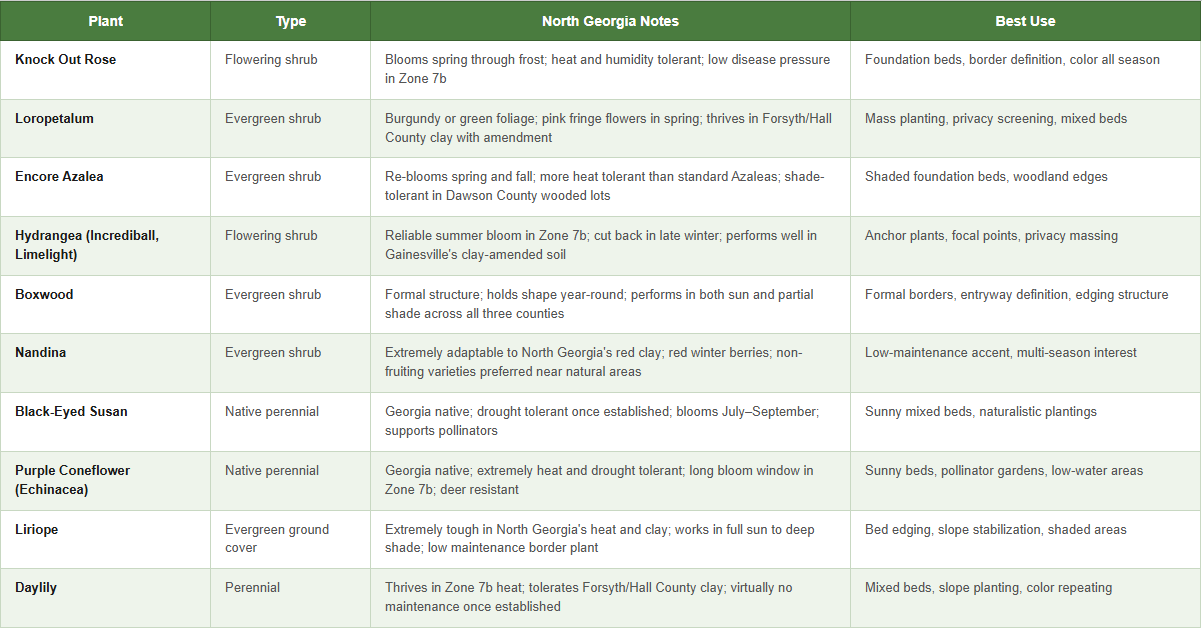
This is a reference list, not a menu. What goes in your bed is determined by your site’s sun exposure, soil conditions, maintenance preferences, and what you want the bed to look like—not a catalog. We source from quality local and regional nurseries and match plant availability to your project timeline.
Garden Bed Types We Install
Foundation Beds
The planting beds along the front of your home are the first thing anyone notices about your property. A well-designed foundation bed softens the transition between the structure and the landscape, provides year-round visual interest through a mix of evergreen structure and seasonal color, and frames the home in a way that looks considered and finished. Foundation bed design balances the scale of the home, the height of windows and soffits, and the sun exposure, which varies considerably from property to property across three cities.
Border and Edge Beds
Beds that define the edge of a lawn, a driveway, a fence line, or a property boundary. These beds serve a structural purpose — creating a clear visual separation between lawn and landscape — while also providing an opportunity for mass planting that creates impact at scale. Loropetalum, Liriope, Knock Out Rose, and ornamental grasses are all strong performers in North Georgia border bed applications.
Island Beds
A free-standing bed positioned in the middle of a lawn area, not backed against a structure. Island beds work well on larger Dawsonville and Gainesville properties where the lawn is spacious enough to carry a focal point. They’re designed to be viewed from all sides and typically feature a taller anchor plant at the center, mid-height shrubs around it, and lower ground cover or perennials at the edges.
Shade Beds
On Dawson County’s wooded properties and in the shaded areas of Gainesville and Cumming yards, shade beds require a completely different plant palette. Encore Azaleas, Camellia, Hellebore, Oakleaf Hydrangea, and cast-iron plant all perform well in North Georgia’s partial to deep shade. These beds are often the most challenging to design because light conditions vary throughout the day and season — we assess your specific shade patterns before making any plant recommendations.
Raised Beds
Built above grade with a defined frame — timber, stone, brick, or steel — raised beds are the solution for properties with severe drainage issues, heavily compacted subsoil that resists standard amendment, or any situation where building up is more practical than digging down. We construct raised beds as part of a complete installation project, framing them to suit the property’s aesthetic and filling with properly amended soil. Raised beds warm up faster in spring, drain more reliably, and are easier to maintain than in-ground beds on problematic sites.
Beds That Look Finished and Stay That Way
Material supplied, professionally installed, right depth every time. Gainesville, Dawsonville, and Cumming.
We had a gravel bed we wanted to convert to a planted bed, and Dawsonville Lawn Pros talked us through the fabric situation honestly — told us to remove it and start fresh with amended soil. The explanation made complete sense and the bed has had almost no weed pressure a year later. Should have done it years ago.
Three different landscapers had planted things in our front beds, and they always died within a season. Dawsonville Lawn Pros actually amended our clay soil and built a small raised section where the drainage was worst before putting anything in. Everything they installed is still thriving a year later.
We are in a Forsyth County HOA and do the seasonal color program — they come three times a year and swap out the annuals. The beds always look fresh and appropriate for the season and we never have to think about it. Our neighbors keep asking who does our landscaping.
Services That Pair Well with Garden Bed Installation
A flower bed installation is most impactful when the surrounding services are handled correctly. We also provide:
- Plant and tree installation — shrubs, perennials, and ornamental trees up to 2-inch caliper sourced and installed across all three counties
- Garden bed edging — natural edge redefining, metal, plastic, stone, brick, and paver edging for clean, defined bed perimeters
- Mulch and pine straw installation — softwood mulch, longleaf pine straw, and rubber mulch for bed finishing and annual refresh
- Sod installation — if the bed installation is part of a larger yard renovation, sod can be coordinated in the same project
- Spring & Fall Cleanup — seasonal property reset to keep beds clear between seasons.
Our Service Area — Hall, Dawson & Forsyth Counties
We design and install flower beds throughout the North Georgia service area. Call 762-380-2214 to confirm we cover your address.
Gainesville, GA
Dawsonville, GA
Cumming, GA
Not sure if we reach your address? Call 762-380-2214 and we’ll confirm your location in under a minute.
Call Now — Gainesville, Dawsonville & Cumming
Licensed. Insured. Family-owned. 10+ years. Material supplied and installed.
Frequently Asked Questions — Flower Bed Installation
Flower bed installation cost varies based on bed size, plant selection, soil prep required, and whether the project includes raised bed construction. A small foundation flower bed with 5-8 plants runs significantly less than a full front-yard design with multiple bed areas, soil amendment, and edging. We give you a written itemized quote before any work begins — no guesswork and no surprises. Call 762-380-2214 or schedule online for your free estimate.
Either way works. If you know exactly what you want, we build it. If you're starting from scratch with no plan, we start with a site visit — we walk the space, talk about what you're trying to achieve, look at sun exposure and the existing conditions, and develop a plant and bed plan specific to your site. You don't need to arrive with anything figured out.
Yes — as part of a complete bed installation project. Raised beds are the right solution for properties with severe drainage problems, heavily compacted subsoil, or any situation where building above grade is more practical than amending what's there. We construct the frame in timber, stone, brick, or steel depending on the property's aesthetic, fill with properly amended soil, and plant to the same standard as an in-ground installation.
The seasonal color program refreshes annual flower plantings at the start of each season — typically spring, summer, and fall. We visit at each transition, remove spent annuals, refresh the mulch layer, and install new seasonal color appropriate for the coming months. The program is designed around your existing bed structure — perennials and evergreen shrubs stay in place; the annual color layer changes. It's particularly popular with HOA community properties in Forsyth County and lakefront Gainesville homes where year-round appearance matters. Call 762-380-2214 to discuss a program for your property.
We break up the existing clay, amend with quality compost to improve drainage and organic content, adjust pH for the planned plant selection, and build the bed to a proper depth before any plant goes in the ground. Clay soil that hasn't been amended is the single most common reason plants fail in North Georgia beds — proper soil prep at installation is what separates a bed that thrives for years from one that needs redoing every season.
Shade-tolerant plants that perform reliably under Dawsonville's hardwood canopy include Encore Azalea, Camellia, Hellebore, Oakleaf Hydrangea, Liriope, native ferns, and cast-iron plant. The specific recommendation depends on the canopy density — dappled partial shade supports a wider palette than the deep continuous shade directly under a mature White Oak. We assess the actual shade conditions at your property before recommending anything.
Yes — a one-year warranty on all plants we select and install. If a plant fails to establish due to our installation workmanship or the quality of the material we provided, we replace it at no charge. The warranty does not cover failures due to insufficient watering during the establishment window, deer damage, extreme weather, or pest and disease issues that develop after installation. We walk through the full terms before any project starts.
Most residential garden bed installations complete in one day — site prep, planting, edging, and mulch. Larger projects with multiple beds, raised bed construction, or design phases may take two days or include a design consultation visit before the installation day. We give you a realistic timeline during the estimate.